
Electronic invoicing in Morocco: what changes in 2026
Electronic invoicing is gradually becoming mandatory in Morocco from 2026, driven by the DGI. Timeline, UBL format, penalties: the essentials to prepare for this major tax reform.
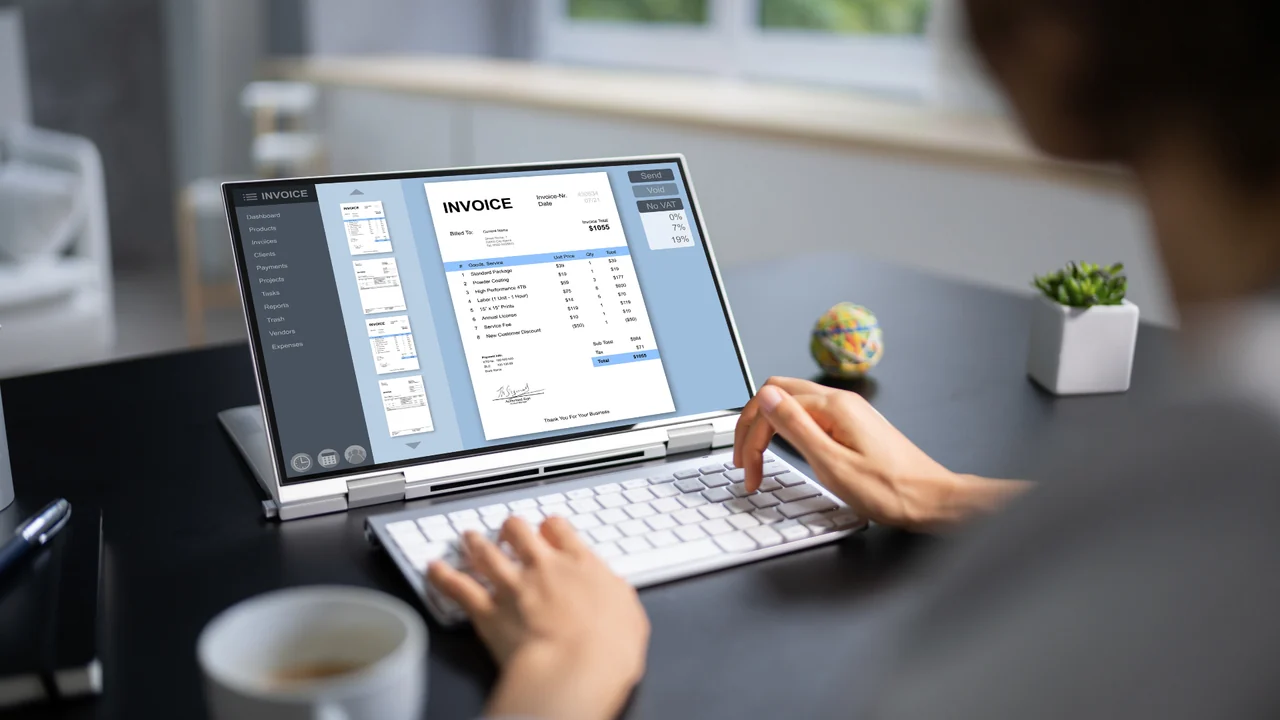
Electronic invoicing is gradually becoming mandatory in Morocco from 2026, driven by the DGI. Timeline, UBL format, penalties: the essentials to prepare for this major tax reform.
Prepare for the reform from the moment you start your company
Felexia Conseils supports your company formation and puts you in touch with accounting firms already prepared for electronic invoicing.
Electronic invoicing is no longer optional in Morocco: the DGI is making it a progressive legal requirement, business by business, from 2026. Whether you are already covered or your company will only be affected in a few years, it is better to understand the reform now than discover it under pressure. This guide explains the principle, timeline, practical changes and how to prepare.
What is electronic invoicing?
Unlike a simple PDF sent by email, an electronic invoice under the reform is a structured document in a standardised format such as UBL, which IT systems—both yours and the tax administration's—can read, validate and process automatically.
The key difference from current practice: today, the paper invoice or PDF you send serves as evidence. Under the new system, the electronic version validated by the DGI becomes the legally recognised original invoice. Paper loses its evidentiary value.
Why this reform?
The Directorate General of Taxes (DGI) is leading this transformation as part of the modernisation of Morocco's tax system, on the legal basis of Article 145 of the General Tax Code, as amended by successive finance laws.
The stated objectives are clear: reduce false invoices and VAT fraud, improve the traceability of business transactions, streamline tax returns, and reduce informal practices that sometimes enter otherwise structured accounts. The reform builds on other recent measures—VAT withholding, tax compliance certificates and payment-term rules—that had already prepared the ground.
Which businesses are affected, and when?
Ultimately, the reform will cover almost all Moroccan businesses subject to VAT—potentially over one million businesses, from large groups to auto-entrepreneurs. However, implementation is phased, starting with the largest organisations:
Large businesses — the first affected, from 2026.
Medium-sized businesses — included in a second phase.
SMEs, very small businesses and auto-entrepreneurs exceeding a certain turnover — wider implementation is planned in subsequent phases, around 2027–2028.
A key point: the exact turnover thresholds separating the phases still vary between sources until the DGI publishes the final implementing decree. To know exactly which phase your company falls into, the most reliable approach is to check directly with your accounting firm or the official DGI portal when the text is published, rather than relying on a single date announced beforehand.
Initially, the system will cover only B2B transactions between businesses, before any potential extension to B2C.
How does the DGI system work?
Morocco has chosen a “clearance” model, meaning prior validation by the administration. In practice, an invoice follows five stages:
Issue. The supplier creates the invoice in structured format using its management software or directly on the DGI portal.
Signature. The invoice is electronically signed using a qualified digital certificate.
Transmission. It passes through the DGI's centralised platform.
Validation. The DGI checks the format, signature and mandatory data for compliance, then validates the invoice.
Receipt. The validated invoice is sent to the customer with an official date and confirmation of receipt.
In this model, the DGI plays a central role: an invoice that has not passed through and been validated by the platform has, in principle, no legal value.
What will change for you in practice
Three practical consequences to anticipate, whatever your business's size:
Your invoicing or accounting software must comply with DGI standards: structured format, platform connection and electronic signature capability.
Electronic signatures become a routine working tool, requiring a qualified digital certificate for the company or its representative.
Accounting follow-up becomes tighter: as every invoice is validated by the DGI in near real time, the time available for recording and correcting errors is reduced.
How can you prepare?
Even if your company is not in the first phase, preparing ahead is easier than being caught unprepared. Three useful steps:
Check with your software provider or accounting firm that your accounting software is compatible with future DGI standards.
Plan the budget: software updates, electronic signature certificate and any support needed—costs vary according to company size and invoice volumes.
Involve your accounting firm early: it can tell you precisely which implementation phase covers your company and help audit your current tools beforehand.
What happens in the event of non-compliance?
Once a company falls within the mandatory scope of the reform, issuing invoices outside the DGI-validated process creates a direct tax risk: an invoice that does not comply with the new format loses its status as the legal original. This may undermine VAT deductions for both customer and supplier and expose them to penalties under the General Tax Code. That is another reason not to wait until the last minute to upgrade your tools.
The risk is commercial as well as tax-related. A customer covered by the reform will simply be unable to accept an invoice that has not passed through the DGI platform, even if it is otherwise correct. A supplier that delays compliance may therefore lose customers already subject to the requirement, regardless of administrative penalties. For businesses working with major accounts—often among the first affected—the pressure to upgrade may arrive sooner than the official timetable by company size suggests.
How will this affect your relationship with your accounting firm?
Electronic invoicing partly reshapes the roles of the business and its accounting firm. Today, much accounting work involves re-entering and checking paper or PDF invoices. With structured invoices validated in advance by the DGI, some manual entry can be automated, freeing time for higher-value advice.
In practice, your accounting firm is also best placed to identify the reform phase covering your company from your file, and to support the choice or update of invoicing software. It is better to involve it early than wait until the requirement takes effect.
Accounting ready for the reform, from the outset
Felexia Conseils supports the preparation of your company formation in Morocco. You can present your project remotely; the firm then explains the documents, formalities and arrangements suited to your circumstances.
Start my companyFAQ — Electronic invoicing in Morocco
Is electronic invoicing already mandatory in 2026?
It becomes mandatory gradually from 2026, starting with the largest businesses. Wider implementation across the economy, including SMEs and auto-entrepreneurs, is planned in later phases through 2027–2028 according to current sources.
Who is leading the reform?
The Directorate General of Taxes (DGI), under Article 145 of the General Tax Code as amended by successive finance laws.
Do I need to change my invoicing software?
Not necessarily: it depends on whether your current solution meets DGI standards. A preliminary audit, often carried out with your accounting firm, determines whether an update is enough or a new solution is needed.
Will paper retain its legal value after the reform?
No, for businesses within the mandatory scope: the DGI-validated electronic version becomes the legally recognised original invoice, and paper loses its evidentiary value.
Felexia Conseils
Your online accounting firm in Morocco
Company formation, domiciliation, accounting and legal support—an expert team by your side. Responses during business days.
Written by
Felexia Conseils
Informational resource on company formation and formalities in Morocco.
Talk to an expert →Related reading
All guides
Accounting firm in Casablanca: how to choose well in 2026
Casablanca has the largest concentration of accounting firms in Morocco, which can make choosing harder rather than easier. Here are practical selection criteria, expected fees and mistakes to avoid before signing.

Accounting firms in Morocco: everything to know in 2026
Everything to know about the role of an accounting firm in Morocco in 2026. Discover how to optimise your bookkeeping, secure your tax returns (VAT, corporate and income tax) and ensure your company's legal compliance with Felexia Conseils.

Company formation in Rabat
The Kingdom's administrative and political capital, Rabat offers entrepreneurs a stable, institutional environment. Discover the specific company formation procedures in Rabat in 2026.